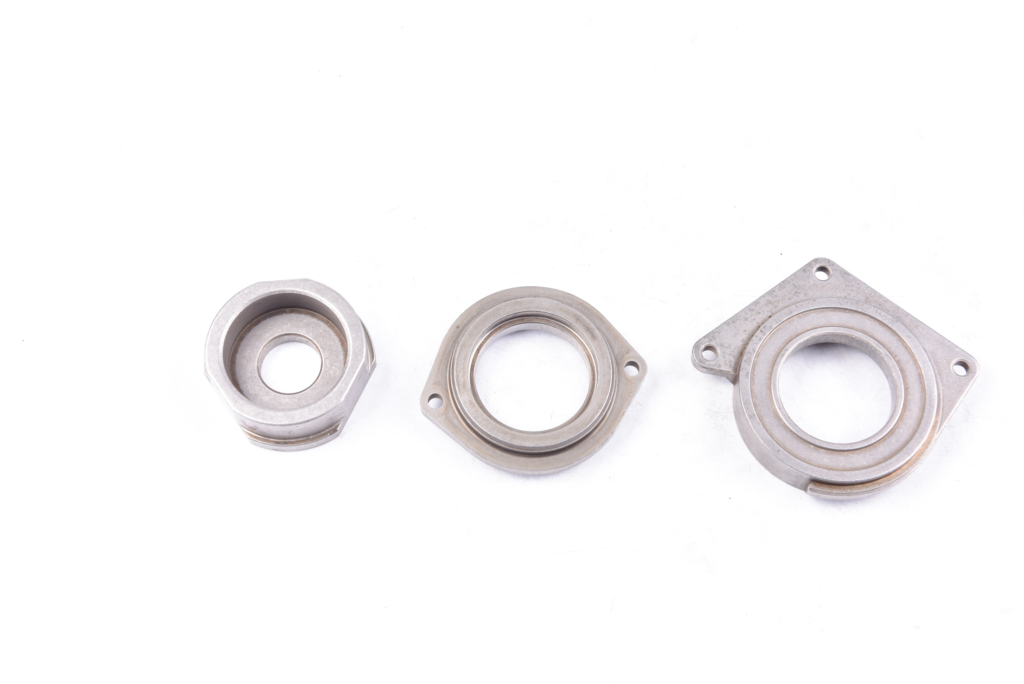
Eastern Sintered Alloys: Company Profile, PM Capabilities & Sourcing Considerations
An engineering review of Eastern Sintered Alloys, Inc. (St. Marys, PA): public directory data, manufacturing scope, materials, secondary operations, and dual-sourcing evaluation criteria.
- Core Technology: Conventional press-and-sinter powder metallurgy utilizing rigid tooling and atmospheric furnace sintering.
- Documented Capabilities: Production of structural iron-base alloys, stainless steels, copper/brass/bronze, and magnetic materials, supplemented by copper infiltration, sizing/coining, and gear rolling.
- Primary Target Sectors: Automotive, agricultural, off-highway equipment, consumer appliances, power tools, and lawn/garden machinery.
- Procurement Purpose: This independent guide provides an objective capability baseline for supply chain teams auditing North American PM capacity or evaluating secondary source partners for cost, lead time, and redundancy.
Key Takeaways
- Regional Industrial Heritage: Located in Elk County, PA, the historic center of North American powder metallurgy, with access to regional powder blending, tooling, and thermal processing supply chains.
- Verified Process Focus: Public records confirm press-and-sinter specialization; micro-miniature parts requiring metal injection molding (MIM) fall under separate operational classifications.
- Drawing Governance: Quality and material specs must reference objective industry standards (MPIF Standard 35 for material properties and ASTM B962 for density verification), regardless of supplier geography.
- Dual-Sourcing Rationale: Global OEMs often combine domestic near-site partners for rapid prototyping and regional assembly with qualified overseas partners for high-volume programs and tooling risk dispersion.
Who Is Eastern Sintered Alloys?
When engineering and procurement teams research powder metallurgy manufacturing capacity in North America, Eastern Sintered Alloys, Inc. (ESA) frequently appears due to its location in St. Marys, Pennsylvania, widely recognized as the industrial heart of the US powder metallurgy sector.
Location and Industrial Heritage
The facility operates at 126 Access Road, St. Marys, PA 15857. The Elk County region developed a concentrated cluster of carbon graphite and sintered metal fabricators throughout the mid-20th century, resulting in a dense local ecosystem of toolmakers, powder atomizers, furnace builders, and secondary heat treaters.
Primary Product Portfolio (MPIF Directory Records)
Official trade directory listings maintained by the MPIF verify that the company produces components across several distinct functional categories:
- Armatures, Poles, and Sensor Rings: Soft magnetic and low-carbon iron components engineered for magnetic flux pathways, solenoids, and rotary speed sensing.
- Gears, Sprockets, and Pulleys: Multi-level power transmission components designed for timing systems, drive motors, and reduction gearboxes.
- Bearings, Bushings, and Flanges: Bronze and iron-copper self-lubricating sleeve bushings and flanged bearing mounts.
- Cams, Lobes, and Pawls: High-hardness wear surfaces with complex profiles used in locking, ratcheting, and actuation assemblies.
Industries Served
The documented customer segments align with high-volume industrial press-and-sinter applications, including automotive sub-assemblies, agricultural implements, off-highway construction machinery, major home appliances, handheld power tools, and commercial lawn and garden equipment.
What Can Be Verified About Eastern Sintered Alloys?
Procurement teams require clear demarcation between independently documented facts and commercial details that require direct verification via RFQ. The following matrix contrasts public directory data with operational variables:
| Operational Parameter | Verification Status | Primary Source | Sourcing Review Action |
|---|---|---|---|
| Plant Location | Verified | MPIF Member Directory | Confirmed at 126 Access Rd, St. Marys, PA. Evaluates domestic freight transit and regional supplier proximity. |
| Core Forming Process | Verified | MPIF Member Directory | Press-and-sinter mechanical/hydraulic compaction. Radial features and transverse holes require secondary machining. |
| Material Systems | Verified | MPIF Member Directory | Iron/iron alloys, stainless steel, copper/brass/bronze, and magnetic alloys conforming to MPIF Standard 35. |
| Secondary Operations | Verified | MPIF Member Directory | In-house or controlled routing for CNC machining, sizing/coining, gear rolling, coating, and copper infiltration. |
| Furnace Capabilities | Verified | MPIF Member Directory | Continuous mesh belt furnaces, high-temperature sintering (2,100°F to 2,300°F), and sinter-hardening atmosphere zones. |
| Quality Management | Documented | MPIF Member Directory | ISO 9001 recorded. Buyers requiring IATF 16949 or specific Level 3 PPAP deliverables should confirm scope on quote. |
| Minimum Order Quantity | Not Publicly Verified | Direct Inquiry Required | Commercial setup thresholds depend on active press capacity, die changes, and production schedules. |
| Tooling & Sampling Lead Times | Not Publicly Verified | Direct Inquiry Required | Lead times for carbide die-set fabrication and T0 first article submissions vary by toolroom queue and complexity. |
| Total Press Tonnage Fleet | Not Publicly Verified | Direct Inquiry Required | Part projected surface area must be cross-referenced against available machine tonnage to ensure compaction density. |
Sintered Alloy Materials and Specialized Operations
To accurately specify components, engineers should understand the metallurgy and post-sintering processes documented for structural alloy suppliers:
Ferrous Structural Alloys (MPIF FC & FN Series)
The core of mechanical PM production relies on carbon-iron mixes with copper or nickel additions. For example, MPIF FC-0208 (iron with 2% copper and 0.8% combined carbon) provides as-sintered tensile strengths between 450 and 650 MPa at nominal densities of 6.6 to 7.0 g/cm³ via liquid-phase sintering. MPIF FN-0205 (nickel-steel) offers superior impact toughness and fatigue resistance for dynamic gear and sprocket applications.
High-Temperature Sintering & Stainless Steels
While standard ferrous sintering runs between 1,120°C and 1,150°C (2,050°F), running furnaces at 2,100°F to 2,300°F (1,150°C to 1,260°C) accelerates solid-state atomic diffusion. This temperature range is critical for sintering 300- and 400-series stainless steels (e.g., 316L, 410L) to reduce tenacious chromium oxides, round residual pore structures, and optimize corrosion resistance.
Copper Infiltration: Density and Pressure Tightness
One notable capability listed in industry directories is copper infiltration. In this process, a pressed copper-alloy slug is positioned over a porous iron-carbon green compact prior to entering the furnace. As temperatures exceed the copper melting point (~1,083°C), liquid copper wicks throughout the interconnected iron pore network via capillary pressure. This achieves:
- Component density levels exceeding 98% of theoretical maximum (≥7.3 g/cm³).
- Complete hermetic sealing for pressurized hydraulic, pneumatic, and fluid-handling parts.
- Enhanced machinability and plateability without internal chemical bleed-out.
Surface Densification via Gear Rolling
For high-load transmission gears, residual surface porosity can limit contact fatigue life. Gear rolling subjects sintered gear teeth to severe plastic deformation under rolling dies. This process densifies the outer case (0.2 to 0.8 mm depth) to near 100% density while leaving a ductile, dampening porous core, yielding tooth bending strength comparable to wrought steel.
Engineering Sourcing Framework: How to Audit a PM Manufacturer
When evaluating any powder metallurgy supplier, whether in Pennsylvania or through international manufacturing hubs, engineering teams should audit four operational dimensions:
| Audit Dimension | Critical Inspection Points | Verification Standard |
|---|---|---|
| 1. Compaction Tonnage Fit | Verification that component cross-sectional area matches press tonnage to avoid neutral-axis low-density soft spots. | Press tonnages matching part footprint (≥500 to 700 MPa required pressure) |
| 2. Furnace Atmosphere Control | Automated continuous dew-point sensors and carbon-potential monitoring to prevent surface decarburization or oxidation. | Atmosphere dew points stable below −40°C in the hot zone |
| 3. Density Verification | Methodology used for daily lot-level density release checks across core and thin-section features. | Archimedes water displacement per ASTM B962 |
| 4. Gear & Profile Metrology | Presence of dedicated CNC analytical gear measuring equipment alongside general multi-axis coordinate measuring machines. | Involute profile, lead, and pitch runout per AGMA / DIN classes |
Strategic Dual-Sourcing Considerations
Modern procurement strategies rarely rely on single-source or single-region supply chains for mission-critical sintered metal parts. Automotive Tier-1 and industrial equipment manufacturers routinely balance supply bases using dual-sourcing models:
- Lead Time vs. Volume Economics: Maintaining domestic partners for engineering development, rapid prototyping, and emergency replacement batches, while allocating stable, high-volume production to cost-competitive overseas plants.
- Tooling Redundancy: Storing production-ready carbide die sets in two physically distinct geographic regions mitigates plant shutdowns, regional power disruptions, and shipping choke points.
- Standardized Technical Language: Adopting universal specifications (such as MPIF Standard 35 mechanical property thresholds and ISO dimensional callouts) ensures engineering interchangeability between production sources without drawing revisions.
JH PM Custom Sintered Component Capabilities
For organizations evaluating secondary manufacturing options or global sourcing alternatives, JH PM (Ningbo Jiehuang Chiyang Electronic Tech) provides verified precision press-and-sinter capabilities from its modern production center:
- Facility Infrastructure: 7,000 m² production site located in Shaoxing, Zhejiang, delivering over 3,000 metric tons of custom sintered structural components annually.
- Pressing Fleet: 19 automated mechanical and hydraulic PM compaction presses spanning from 6 tons to 1,000 tons, accommodating both miniature components and large, multi-level structural parts.
- Sintering Systems: 2 continuous mesh-belt protective atmosphere furnaces and vacuum sintering units equipped with continuous dew-point monitoring and integrated steam-treatment capabilities.
- Quality Metrology: In-house inspection laboratory featuring 3 German Zeiss Coordinate Measuring Machines (CMMs), 1 dedicated gear measuring center, optical comparators, and Archimedes density testing balances.
- Quality Systems: Certified to IATF 16949:2016 and ISO 9001:2015 with full MES barcode lot traceability from raw powder batch to finished carton.
- Commercial Agility: Production Minimum Order Quantity (MOQ) established at 2,000 pieces. Tooling lead time averages 20 working days; First Article (T0) trial samples ship within 25 working days. Detailed DFM engineering reviews are delivered within 24 to 48 hours.
- Application Scope Boundary: Focused strictly on automotive, industrial hardware, consumer appliance, and non-implantable medical/surgical instrument components (explicitly NO ISO 13485, no implantable devices).
Frequently Asked Questions
Evaluating a Second Source for Your Sintered Parts?
Get a comparative technical review of your current powder metallurgy drawings. Send your 2D PDF prints and 3D CAD models to JH PM’s engineering team for tooling feasibility analysis, MPIF material cross-referencing, and tiered production pricing within 24 to 48 hours.